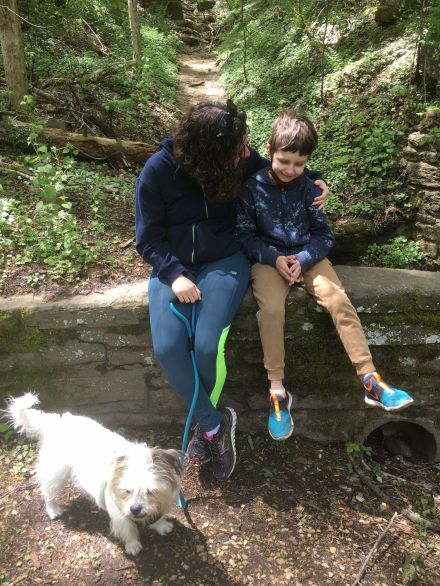
Can I get some paid maternity leave with those roses?

Today is not mother’s day, but it’s my mother’s day because tomorrow I will be working a long call. I will not see E awake at all unless I accidentally on purpose wake her up when I get home which, *blush*, I have done more than once. Before I had a baby, Mother’s Day seemed like a forced over-sentimental construct. Now it is more important to me than Christmas (ok, I’m Jewish), Hannukah (ok, that’s not really an important holiday for Jews), or my own birthday (as an adult, birthdays are kind of eh). It’s the holiday we mamas EARN! Cause being a mom is amazing but it is a shit-ton of work, and the most arduous work is done in the years that the child won’t even remember, so bring on the chocolates! Excuse the profanity, but this Mother’s Day I’m feeling a little feisty. Why am I am feeling feisty? Because everyone is buying their mothers flowers and making them breakfast in bed, but America is still the developed country in which it most sucks to be a mother.

Here are some of the countries that currently offer women paid maternity leave: Rwanda (12 weeks at 67%), Sudan (8 weeks at 100%), Haiti (100% for 6 weeks), Bangaldesh (8 weeks before delivery, 8 weeks after, how cool is that?), Somalia (14 weeks at 50%)…. the list goes on and on and on and on. Here are the only three countries that do not: the United States, Swaziland, and Papua-New Guinea. Our lack of support of mothers (and fathers!) is even more embarrassing when compared with countries that are more our economic equals. French women get 16 weeks at 100%, rising to 26 weeks at 100% for the third child. They are eligible for 104 weeks of unpaid leave which can be shared with the father. In Canada new mothers get 50 weeks at 55% and fathers get 35 weeks at 55%, some portion of which is shared with the mother’s 50 weeks. Why have all but three of the world’s countries decided that women should be paid to stay home and care for their new babies? Could it be that having and raising babies serves an important societal function?

Here is a more personal statistic. We pay $309/week for high quality but no bells-and-whistles day care. That’s $16,068 per year. We’re lucky, because we make enough money to also afford rent and food and gas and car insurance and health insurance, but just barely. If I were a single parent or had two children, I actually don’t know how I would afford to work. Then there is school to think about. It is hard to get into a high quality public school where we live, so I’ve priced out the private schools in the area. $28,000/year for first grade? Yes, that’s right. They are even offering parental loans for elementary school these days, so we can look forward to an era of stacked student debt, in which parents are paying their own loans and their children’s loans. This is not sustainable. Then I think of all the children who do not have a choice, who waste years of their lives in schools that do not offer a real path out of poverty, that perpetuate the cycle of violence, underachievement, and early childbearing.

As a parent in America, you get the explicit and implicit sense that having a kid is kind of your own fault. You break, you buy! Having a child is a lifestyle choice, like buying a European car that is expensive to service. No one is going to pay you to stay at home while your perineum heals — no one forced you push a baby through it! No one is going to let you go first in line when your toddler is screaming their head off in the supermarket line (um, why can’t that mother control her child?). No one is going to find creative ways to fund improvements in education (here’s a thought: make everyone and every company actually pay taxes on their income). But an economy cannot survive without people in it. I’m no economist, but it seems to me that it is in the best of interest of our economy for human beings to continue to exist. In other words: Dear America, You’re Welcome! Love, Mothers. Icing on the cake if these up-and-coming citizens are not drug addicts or criminals and if they can hold down a well-paying job such that they can buy stuff. Who will be paying into social security when you and I are shuffling to our retirement home mailboxes to pick up our social security check? And how can we continue to be successful in the global economy when 26% of high school graduates cannot read at their grade level? The decision not to invest in children will be the death of the American experiment. There are some things people just can’t do by themselves, and being born, surviving the first few years of life, and learning complex subjects like calculus are some of them.

So tomorrow — find a place of heartfelt gratitude and while you are there, call your mother. She did a lot for you that you can’t even remember. For example, you pooped on her more than once. Then, next time someone tries to tell you that there isn’t enough money to support mothers (or fathers) as they do the grunt work of keeping the next generation of Americans alive, don’t believe them. If Burkina Faso can do it, so can we.

Keep the baby alive, and other things I have learned about parenting

I visited a friend today who has a new daughter, 16 days old. The baby is extremely lovely. She looks just like her father and just like her mother and already has the capacity for skepticism which is of huge importance in my opinion. She slept in my arms for several hours and smiled in her sleep and stretched a lot and a couple of times opened her dark eyes and made contact with me.

Time changes around a new baby. There is no 11 o’clock or 1:45. There is feeding, rocking, changing, rocking, cooing, smiling, admiring, and so on and on. (There is also losing your mind from boredom and feeling worried about everything and being exhausted beyond limit, but more on that later.) I got to my friend’s house at 11am and it felt like twenty minutes had passed when in fact it was 1:15 and I was late for a lunch date. Also, I am never so much the inhabitant of my physical body as when I am interacting with a baby. Whereas usually my head does most of the work and gets most of the credit, with a baby it’s the curve of the arm, the swing of the hips, the lilt of the voice that is at work. Holding the baby today, I remembered the mammalian existence of my first weeks and months with E, moving slowly from couch to bed to couch again, constantly in physical contact with the baby, our mutual fluids running out of every seam. At the time it felt awkward, this shift from the goal-oriented-success world to eating-sleeping-humming world but now I am so grateful to have experienced it, to still be experiencing it every day with my daughter as she grows: the animal life that is only ever now.

My friend is having a hard time, as I think all new parents do, as I did. She said, as I remember saying, as I say to this day: No one told me how hard this would be! Even though I distinctly remember telling her that the first six weeks of E’s life were super, super hard, that breastfeeding was nerve-wracking and never completely worked for us, I don’t think it’s possible to hear and understand these things before you actually go through them. When people tell you “It’s totally life changing,” you don’t realize what that means: that the life you had before is over and a new one takes its place in which you have much less control and much less freedom. Given that we live in a culture in which both adulthood and success are defined by having control and freedom, this transition can be tricky. We build our identities around the work we do, the people with whom we interact, the activities we enjoy, our tastes and beliefs. When you have a child, all these things change radically overnight. Some aspects of ourselves return over time, others are permanently altered.  Added to these already stressful changes are the avalanche of mythologies and dogmas and opinions around motherhood and child rearing that can really drive a person crazy. Never had I been the object of judgmental looks as much as I have been since becoming a parent — just try mixing a formula bottle at Mom & Baby yoga class, my friends! You might as well put a lit cigarette in that baby’s mouth. All this on top of the sheer hard work and anxiety of it — the nights and days and nights of walking back and forth with the crying child in your arms, worrying all the time about whether or not the baby is still breathing, learning through error what you need to bring with you on an outing (answer: at least two of everything and if your baby eats formula, don’t forget the formula #oops! #ivebeenthere #thebabyisstillalive).

Talking with my friend today, I wanted so badly to palliate some of her uncertainty and exhaustion. I wanted to give her a full-body taste of how much better things get as you learn your child and yourself and find your voice as a parent, as your child grows and can do more for themselves. But of course, everyone has to find their own way there. In the words of Mary Oliver, “Nobody gets out of it, having to / swim through the fires to stay in / this world.” Still, there are some things that might have helped me 16 months ago, so here goes — for my friend and anyone else out there who is staring down at their new baby and thinking “This is the most amazing and perfect creature I have ever laid eyes on” and at the same time thinking “Holy shit! What have I done?!”

1) Here is the core task of parenting: Keep. The. Baby. Alive. On some days, like when you have the flu or you haven’t slept for more than 30 minutes in a row in 72 hours, this in and of itself will seem like a monumental task, but if you accomplish it which you likely will, that day has been a parenting success. Now there all kinds of more nuanced parenting tasks like cutting the baby’s fingernails (anxiety, thy name is infant fingernail clipper!) and getting on the right preschool waiting lists and teaching your child to say “thank you” and “ladybug” but you can’t always be attending to those things because you will have shitty days and that’s ok, as long as you do the things that are necessary to keep the baby alive. Aka feed it and keep the bleach in a locked cabinet.

2) It’s ok if it takes a while to feel fully connected with your baby. Some women pop their baby out and immediately feel connected on every level to that new person. Other people (aka: me) take a little longer. I loved E from the beginning but I was also in a ton of pain and dealing with post-partum complications for the first month. I was struggling through breastfeeding challenges and my own insecurities as a parent (that awkward moment when your fear that you are not bonding enough with your baby makes it hard to bond with your baby). Again, I loved her fiercely, but sometimes when I looked at her in her crib from across the room, I thought: Me? I’m that baby’s mother? And it seemed incredibly surreal. Then, sometime in the second month, we clicked into each other forever with a glue that will outlast time and space. For some women, it takes longer than that. But see #1 above. Your job is to keep the baby alive. The rest will come (as long as you are not suffering from postpartum depression which can throw a wrench in the process and should be treated. Take this quiz and talk to your doctor right away if your score is concerning).

3) It’s ok to do things for yourself. It’s ok to leave your baby in the care of trusted people while you eat, sleep, get a haircut, or talk to your best friend from college on the phone. Your baby needs you but not every single second of every single minute of every single hour etc. If you need to go away for a night for work or, in my case, have seven residency interviews when your child is five weeks old, it’s ok, as long as you have left your baby with plenty of its nutrient source and another loving adult. Some people believe that their child should be with them always and if this works for you, I think it is a wonderful thing. For me, it has worked best to recruit a little love army for E and she has an extended network of people who think she is the cat’s meow. This is working for us. Do what feels good and right to you but if this includes going to a movie while your best friend watches your baby once in a while, it is ok.

4) It’s ok to feel sad about things you miss from your life before the baby. It’s ok to feel sad period. It’s ok to feel bored when you are caring for your baby. It’s ok to feel frustrated with the baby when you can’t figure out why he is crying and it is ok to feel relieved when she goes to sleep and you can get a shower in and watch twenty minutes of The Wire while eating a chocolate pudding pack standing up in your towel, or you know, whatever it is you like to do. There is a lot of crapola out there about how your feelings can hurt your baby. Depression, anxiety disorder, and other mental illnesses that impair a person’s functioning can have a detrimental effect and should be treated pronto, but your average feeling cannot lash out scissor-like and gouge a hole in your baby’s future. Mothers are still allowed to have a full range of feelings, thank you very much! Do not waste mental energy feeling guilty about your feelings.

5) Come to think of it: Do not waste mental energy on guilt at all. Banish guilt as much as possible. Do you try your best to make good choices for your baby? Are you providing a consistent, safe, and loving environment for your baby? Does your baby have nourishment, medical care, and high quality child care? If the answers to these are yes, then you are doing everything you can. Accidents, illnesses, and adolescence will happen to all children and are not your fault.

4) Breastfeeding does not equal love. Breastmilk does not equal love. Breastmilk is good. It’s the best food for babies if it’s safe and available. But if you are not making enough breastmilk or you have an illness or take a medicine that precludes breastfeeding or you cannot or do not want to breastfeed, this does not mean that you do not love your baby. As a person whose first month of parenting was made 80 times more stressful and guilt-ridden by my inability to make enough breastmilk despite pumping EVERY TWO HOURS AROUND THE CLOCK, I think that it would have been better for my baby had there been less emotional drama around the issue and had I felt free to spend less time pumping and more time enjoying my baby. If breastfeeding is easy for you and it’s all going swimmingly, remember to be gentle and kind and nonjudgmental to the mothers who are struggling with it.

5) Don’t let anyone tell you what is best for you, your baby, and your family. This includes friends, co-workers, mothers, mothers-in-law, doctors, lactation consultants, books, or the judgmental voice in your head. All of these except the last two may love you and want the best for you and your baby, but they are living their lives and you are living yours. If working is the best thing for your family, work. If staying at home is the best thing for your family, stay at home. Either one will have sadnesses and frustrations and difficulties and joys and pleasures and advantages. Read parenting books and doctors’ guidelines as a way to inform your choices, but collect their ideas into a larger collage of possible options. Every child is different and no child will fit perfectly into a paradigm. Be skeptical of dogma, advocate for yourself and your child if you are worried about something and doctors brush you off, trust in your own intuition about what your child and your family needs.

6) Anxiety is part of parenting and it’s here to stay. The thing you love most inhabits a mortal body and then develops the capacity to move independently, to put things in it’s mouth, and finally to make bad decisions for itself. You will learn to live with anxiety and manage it. It will wax and wane with the circumstances. Current worries will pass and new ones will arise. It’s tiring but you can survive it and thrive in spite of it. You’ll maybe never sleep quite as soundly again. I’m just being honest.

Having a child is the ultimate adventure, which is a cliche, but apt in this circumstance. It is full of unknowns and good and bad things happen along the way. It’s exciting to watch a person develop and you learn a lot from accepting and negotiating another person’s total dependence. You get to see the world anew through an unjaded pair of eyes every day — again a cliche, but a true one — and this suffuses life with pleasure and meaning and hope. Becoming a parent puts an end to your childhood, but reawakens your child self. Mostly, there is the love, the massive, unconquerable, infinite love. It’s like they always say: there is nothing like it.

Here is my favorite meme of all time, which kind of says it all.

Ass in chair, or the drama of consistency

I am so tired that I am drifting off in the midst of my task, so tired that I can barely write a sentence that has a beginning, middle, and an end. Last night it was hot for the first time and since my body is tuned to sleep only when the room temperature is between 68-72 degrees, I did not sleep. Where was I again? Oh yes, the task. The task is to do something writing-related between the hour of 8pm-9pm tonight, no matter how fragmented and befuddled. It’s 8:37 now.

Stephen King has said, “Writing = ass in chair.” You just have to sit there consistently and put words on a page, regularly, for a long time. This is a concept I’ve been struggling with my whole life. As a child, I was talented at music, but never wanted to practice. I was a diligent meditator and it enriched my life and my inner world immensely, but one day I stopped doing it every day and I slowly became a stranger to that part of myself. I toyed with making a go of it as a writer in my early twenties, but feared that I lacked the self-discipline to do the whole ass-in-chair thing. Well, the stakes are a lot higher now. As it turns out, I too will one day die as all beings do. And there will never be a perfect, protected time to write. It will always be woven in and through other things. I fantasize about having a writing room with sun streaming in through two huge windows, having as my sole work of the day the task of feeling the world into words, having at the end of the day the satisfaction I feel only when I have written something to a point of new understanding. If I want to have that even for one day a month or one day a week or one week a year, let alone a more substantial part of the time, there is only one way to get there: ass in chair, no matter how tired or bored or frazzled I am, no matter how many sleeveless onesies need to be purchased for a certain pig-tailed dervish.

I went to the dentist this past Monday (it’s my vacation. Aren’t you envious?!) and it turns out I have 4mm pockets in a lot of places and even two 5s. This means that I am in “THE WARNING ZONE” as an ominous poster on the wall read, the zone where I am in danger of all my teeth falling out or needing thousands of dollars of periodontal care, or both. The dental hygienist was as politic about this as any oral health professional I have ever encountered. “You need to floss every night and brush your teeth after every meal. And let’s get you in for cleanings a little more frequently” (aka more than once per presidential term of office). I have been treating oral health kind of like I treat writing: it happens when I am well rested and in a good frame of mind, which is to say not often. I brush every day but floss only here and there and like I just said: not a lot of dentist visits. But now I have to floss my teeth EVERY NIGHT and if I don’t, pain and suffering and poverty will dog me the rest of the days of my life, so saith the dentist.

I surrender. I am almost 33 years old, the Jesus age, and I guess it’s time to learn to do some things on a daily basis. It’s 9:11 and I’ve outlasted my hour by 11 minutes and of course I have lots more to say now that I’m on a roll, but instead I’m going to go downstairs and cut friend eggplant into tiny pieces so that E can eat them for lunch tomorrow. Then I’m going to fall into bed if I make it back up the stairs. But first I’m going to floss. Then I’ll come back tomorrow night and try again, one hour at a time.

Here is an Onion article on this subject that is just so true and sad and funny.

Slavery, freedom, depression, resurrection: you know, the usual

Can it be that it is almost April? Can it be that almost a month has passed since I last posted here, since I last stepped back and thought a thought? Who am I again?

Here’s the thing about being a mother, or an intern, and especially a mother who is also an intern: Every moment you spend doing something is a moment that is stolen from something else. My time with my family is time stolen from my job and by extension from my patients. Time for myself is time stolen from my family. Time for friends is time stolen from doing taxes which is time stolen from cleaning something which is time stolen from catching up on sleep which is time stolen from writing which is time stolen from spending time with my family which is time stolen from the practice of medicine and around and around we go. I’m tired of stealing and tired of having to steal. Right now I’m fifteen discharge summaries in the hole, E is sick for the fourth day in a row, I did not sleep more than 30 minutes at a stretch last night, and the list of topics I need to read about is about a year long. But I’m sitting down to write because it reminds me of myself and these days I really need the reminder.

This year I spent Passover at the home of a new friend of mine. I was with E, who lost interest after about 10 minutes, so I spent the rest of Seder chasing her up and down the hall. All she wanted was to lunge down the stairs headfirst and I had to stop her again and again. We had to leave right as the meal was being served because it was an hour past bedtime. But for some reason I was really paying attention this year. There’s a part in the seder — two actually — where you wash your hands as part of the ritual. My friend suggested that we name something we would like to wash ourselves of in the coming year. When it was my turn, I felt unexpectedly that I was about to cry. “I’ve been so, so negative at work,” I heard myself saying. “Just seeing the darkness in everything all the time. I want to be free of this constant negativity.” I looked up and I couldn’t tell if what I was saying was resonating at all with the other people at the table. Eliana shrieked and I was off running down the hall again.

Jews are commanded each year to see ourselves as having been slaves, as having personally come out of the land of Egypt. I’m not sure if this injunction was intended to inspire contemplation of one’s own figurative enslavement or liberation, but I’ll admit, I am feeling like a slave. I know that I am not a slave. I am a person being paid a wage to work a job that I chose. I have a home, a family, and means to provide for them. Hell, I just spent $60 on music classes for my fifteen-month-old. #firstworldproblems. But I do not feel free. Every day as I leave my family to go to work for 12, 13, 14, 15, 16 hours, every time I put Eliana to bed knowing that I will not see her for 48 hours, I feel powerless. Every time I am castigated for something outside of my control at work or make an error that affects a patient out of fatigue, competing stressors, or just lack of knowledge, I feel powerless. Every time I make a commitment to someone I love and have to cancel, every time I answer an email with the line “Sorry for the long delay” (aka every time I answer an email), I feel powerless. Over time this feeling of powerlessness is adding up to a phenomenon that I hesistate to invoke because it carries so much cultural baggage, but at the same time needs to be spoken out loud more often by people in medical training: depression.

Here are the facts: Depending on the study you read, 25-30% of interns experience depression during internship. In one study, up to 12% reported having suicidal ideation at least once during residency. Articles cite many potential contributing factors including long hours, skewed effort-to-reward ratio, stressful experiences of patient suffering and death, lack of control, inadequate time for self-care, sleep deprivation, medical errors, stresses on marital and parental relationships, lack of feedback on performance, and many others. All of these are true. I will add to these a term that I have come up with over my years in medicine: hierarchical stress, the stress of negotiating all the nuanced politics of the medical hierarchy. As an intern, you have to consult anywhere from 1-5 people before making most decisions and any or all of these people might be rude or humiliating or dismissive or condescending or have a bad plan that you are forced to execute. Multiply that by hundreds of decisions per day and that’s a lot of hierarchical stress.

It is comfortable to hide behind statistics and large cohorts. Here are some different kinds of facts: Almost daily on the way to work I fantasize about being in some kind of accident that will render me partially disabled. On worse days, I have suicidal ideation — not the kind where you buy a gun or practice your slip knot, but the kind where you irrationally imagine that some relief might come of it but are not in any real danger of committing the act. I cry either on the way to or on the way home from work at least 2-3 days per week, and sometimes at work. When I get home, I have to remind myself that E brings me joy. I have to consciously remind myself of the possibility of joy and then kind of pretend until I rediscover the emotion. Most of the time, I feel either irritable or drained of all emotion entirely, flat and resigned and without soul. And I am not alone. Multiple of my fellow interns have reported the same experiences, down to the uncanny details. It is for them that I am writing this, because the taboo against discussing it is so strong. It is time for someone to ask the question: Is this the right way to train doctors? Should the people tasked with hearing our stories and healing us have as the foundation of their professional training an experience of profound and prolonged dehumanization? Negative experiences with doctors are a common tale and this does not surprise me. Working 80-90 hours a week may improve your clinical judgment but it does not lead to a greater capacity for empathy or greater compassion at the suffering of others. If anything, survival demands that you become more self-focused, not less.

During the first months of medical school, a lecturer asked us to go around the room and say why we went into medicine. I was the first or second person to go and I answered honestly: I went into medicine because I wanted to gain a better understanding of what it is to live a human life and also to work to alleviate suffering. When I think back on that earlier version of myself I am both proud and a little embarassed at my own naivete. Oh, the things I did not know. Since that time, what has come into clearer focus is that medicine is a business as much as it is anything else. I have taken on a crushing amount of debt that I will be paying off until I die. As a result, money has entered my career calculus to a degree I never expected. Money is also part of my awareness at work to a degree I never expected. We see more patients in less time than ever before. Hospitalizations are shorter and turnover is higher than ever before. Different options are available to public insurees vs private insurees vs out-of-pocket international patients. Someone is getting rich of all this (read this article if you care about health care in America), but it isn’t me, nor would I want it to be me. After all, sick people are not in a position to bargain and thus our ethical position with respect to charges is a tenuous one. The ever presence of money is part of my disillusionment with medicine, but what did I expect?

Everyone says it gets better and I have to trust them. I will survive this year and residency. After that, I hope I can rediscover the wonder and mystery of the human being’s journey through time in a body, and the sense of privelege in being able to serve as a guide and witness to that journey. I hope I can find a way to practice medicine that is both evidence-based and spirit-based, that is efficient and safe but also reaches beyond these towards higher goals. I hope I can heal myself and be the kind of partner and parent I want to be — present, engaged, and at least at times unfrazzled. I hope I can honor my commitment to medicine while also continuing to nurture the dreamer and the poet in me because there are things of importance that cannot be subjected to the scientific method. I hope I can stop being a thief of time and start being a contented inhabitant of it. If in twenty years I am a country doctor (are there country neonatologists?) living off the grid and growing my own rutabaga you will know why: because what is a career if there is not also a life?

Passover and Easter coincide this year, so both freedom and resurrection are on the menu. I think of my grandmother who spent several years in a concentration camp and my grandfather, who liberated her from a cattle car. They helped smuggle Jews through Europe on their way to Israel. Freedom was not a metaphor for them, but a reality lost and found again. In the face of that history, there is a limit to how much a gay Jewish woman living out and in the open can complain (see above re: #firstworldproblems). That said: I hope to be free from debt one day. In other words, I hope my profession feels like a choice again one day. As far as resurrection goes, all doubt and depression and critique aside, I’ve seen it with my own eyes: the limp, blue baby who takes its first breath after a few minutes of positive pressure ventilation. The child who almost died from overwhelming infection who is sitting in your primary care office telling you about their report card. The former substance using teenager who has become an amazing mother and provider. It’s enough to keep me going day after day after day, which feels like its own form of resurrection.

For me, the concept of freedom is embodied by Nina Simone singing the following song. I am including both the recorded version and a blow-your-mind live version that cuts right to the bone.

Recorded version

Live version

On being a gay mother in medicine

I was so excited to find this blog! I have been reading MiM [Mothers in Medicine, where I recently guest blogged] for a few years and always longed for posts from gay MiM. I am gay (as well as a third year med student in NY) and have not met any physicians who were openly lesbian (I know they are out there – but right now I am in [a place where there are apparently not a lot of out gay people]). Would you be willing to write a post or share your experiences on what it’s been like for you being gay in medicine, especially being a gay parent in medicine.  –  New reader extraordinaire

Dear new reader extraordinaire:

Thank you so much for reading! I am here to tell you that there are lots of gay and lesbian doctors. Come join us in the major metropolitan areas and we can be the objects of warm tolerance and slow political reform together! I was happy to get your request, but to be honest it made me a bit uncomfortable. But more on that later.

Let me tell you about a dinner I attended recently. I was lucky enough to have the opportunity to dine with an interesting and accomplished professor in my chosen field, neonatology. Attending the dinner were several of my co-residents and another faculty member. The topic of families came up and I proudly showed pictures of my little E (dear everyone: do you enjoy seeing these pictures as much as I enjoy showing them? i’m going to assume yes), which prompted the six words that are the having-birth(ed)right of gay mothers everywhere:

“So, what does your husband do?”

This question is both my favorite and least favorite moment of being a gay mother in medicine. It contains so much: an assumption about my sexual orientation. An assumption about my marital status. A probably subconscious attempt to locate my family in a class category. A friendly attempt to get to know me, which I appreciate despite what is about to be a very awkward minute or two.

Here is why I hate this question: It forces me to embarrass the other person and then in turn be embarrassed by their embarrassment. They have made one or more incorrect assumptions (what if I were a single mama? Awkward!) and unless I lie (I do lie sometimes when I just can’t do it), I am forced to expose that assumption. If people are “socially liberal” they often feel compelled to tell me about their gay sister who is getting married in Vermont or their favorite college roommate who is having twins with a surrogate. While I enjoy hearing these stories of my people far and wide, they are not necessary. I do not think you are a homophobe because you assumed I have a husband. Conversely, that you have a gay sister does not reassure me that you are not a homophobe. If you find yourself in a situation where you have made such an error, my suggestion is to simply switch pronouns gracefully and move forward with the conversation.

Also, I hate this question because I haven’t found the right way to answer it. Usually I do this shrugging thing with my shoulders and say “Actually I have a wife and she’s a filmmaker and a professor” where the first part is thrown out at the top speed and the end part is drawn out Southern-style. In the complicated but successful gender ecology of my marriage, “wife” is not really a term I ascribe to C, but it gets the point across more clearly than “partner”. Sometimes I say “Actually, I am married to a woman” but this is also not quite right and seems more intimate, too intimate. Sometimes I just say “She’s a filmmaker” but if the person isn’t really listening, it can prolong and exacerbate the awkwardness.

Here’s a fear that I have: when I am forced to come out to people I barely know in this way, I worry that it makes them think about the way I have sex. I’m not sure if this is true or not, just a hunch/fear that I have.

Mostly, I hate this question because it distracts people from the aspects of me that I want them to notice: my stunning competence as a doctor, my thought-provoking thoughts on science and society, my long brown curls which are having a really good day. In all seriousness, when you are trying to build your career in the EXTREMELY CONSERVATIVE field of medicine, you just don’t want your sexual orientation to be one of the main things that people remember about you.

Did I mention that medicine is an incredibly conservative culture? There are hierarchies. There are spoken and unspoken codes of conduct. There is little room for social error. Here’s a joke: What does a medical school applicant do to rebel? She wears navy shoes with her black suit! You get my point. Within medicine there are political gradations all the way from left of Marx to right of the wicked witch of the West but still there is a shared aspiration toward a kind of collective social perfectionism centered on benign neutrality. And here is a dirty little non-secret: Most major medical institutions (much like the world at large) are still run by straight (or permanently closeted) white men in their sixties and seventies who rose to positions of influence in a time when women, let alone gay people, were mostly absent. In this milieu, it is not comfortable to contravene prevailing social expectations.

On the flip side, medicine is also a world in which people are trained to maintain a calm and neutral expression regardless of what they are being told. As doctors, people tell us things that they probably wouldn’t tell their own reflection in the mirror and we are the custodians of their confidence and their positive self regard. We aspire that they feel comfortable telling us these things without shame or fear of judgment. As such, when I am inevitably forced to execute the big reveal at an awkward moment on rounds or better yet, in a pin-drop quiet OR while holding open a gaping abdomen, it is likely that I will never know what the receiver actually thinks about my sexual orientation. I usually count this as a blessing because it allows me to go about the business of surviving medical training without being forced to swallow huge anger hairballs.

Here’s where I will tell you about the worst gay joke moment of my medical training thus far. I was once in the OR of a renowned cardiac surgeon who asked me what field of medicine I had chosen. I was on an anesthesia elective at the time, on the happy side of the surgical drapes, so I was honest and told him that I was going into pediatrics. He proceeded to tell the following anecdote which I’ll partially redact to eliminate the boring parts: His colleague in medical school went to his surgeon father and disclosed that he had decided to become a pediatrician. His father sighed and said: “Well, at least you’re not a homosexual.” Har har har, the surgeon laughed uproariously as he made a small incision in the patient’s aorta. (He didn’t know I was gay. It’s like double word points in Scrabble. Double douchebag points!)

Thankfully, these moments are rare. Mostly, people are openly supportive or just don’t care one way or the other. I am lucky to have amazing colleagues in my residency program who ask about C and E and understand how important my family is to me. Maybe there are people who are secretly grossed out or who are praying for me or who wouldn’t want their kids to have me as their pediatrician. Maybe there are potential mentors who decide to invest their efforts elsewhere, but I have always been able to find spectacular, generous mentors (all women thus far…. discussion for another day). In short, I do not feel that my daily experience of being a doctor or my career development are negatively impacted by homophobia. But you have to make smart choices about where to train, practice, and reside.

Here is one thing, though: I never, ever talk about my partner with my patients. I don’t know if straight people do this. Usually I don’t talk about myself or my life with patients at all. Our time together should be about them, not about me. Sometimes I invoke my daughter when I am reassuring new parents about newborn things, but that’s as far as it goes. If they asked me about my “husband,” I would just use masculine pronouns. In part I fear their reaction and the possibility that they would see me as a threat to their children. In part I don’t want to use up our time and risk them feeling embarrassed or uncomfortable. I’m there to take care of their kids, not win over hearts and minds. Patients have made derogatory comments about gay people (not to mention black people, East Asian people, Mexicans, women, men, old people, mentally ill people) in my presence and I usually say nothing or muster up a weak “now, now” and redirect the conversation. I’m not sure if this represents cowardice or good therapeutic judgment, but I’d be curious to hear how other people handle these moments.

But back to the question. “So what does your husband do?” Here’s the thing I love about it: It forces me to be myself. I said at the beginning of the post that your request made me uncomfortable and the reason is that I am generally a person who doesn’t like to ruffle feathers (social anxiety: maybe a little. Maybe a lot. Y’know.). Though I am out everywhere I go in medicine and otherwise, I handle the issue by normalizing it as quickly as possible and moving on. When you asked me to write about my experiences as a gay mama in medicine, I had a feeling similar to the one I have when someone asks the aforementioned question: Oh lordy, here we go. But then, for a minute or two or in this case on the internet which is forever, I give myself permission to be important to myself, if not to anyone else. For that moment, it’s not about everybody else’s expectations and value systems. It’s not about what they want to hear. It’s about my right to exist. And if there’s one thing I’m passionate about, it is the right of every person (and animal and plant for that matter) to have singular importance. It’s one of the reasons I went into pediatrics, to defend the right-to-exist (and thrive) of children, whose singular importance is often overlooked. So every time I say “Actually, I have a wife”, I hope that more space is created for everyone to be themselves, to fulfill their own potential without fear of being bullied, or fired, or, in some places, stoned to death. This applies not only to being gay, but also to all forms of difference from what everyone else expects. At the minimum, I hope that if there is anyone else in earshot who is gay but afraid to be out, that they might email me or find me in the halls or at least feel less alone. This may all sound super lofty, but it is what gets me through the awkwardness every time.

To recap: Being gay in medicine is better than being gay in many other professions. It’s better when you live in a place where lots of other gay people live and where there are other gay doctors. It does take some courage but it also teaches you courage.

You didn’t ask for advice, per say, but I can’t resist. At the risk of repeating myself for the nth time: Choose a residency program in a gay-friendly place. Once you are there, be out to everyone. At least you will know who your true allies are. Don’t be afraid to be important to yourself, even when being liked or accepted or hired or promoted feels more important. This applies not only to being out, but also to shaping the kind of career and family and life that will make you most happy. It will serve you not only when someone asks you “So what does your husband do”, but also when you want to craft a part-time position to be home with a young child, or leave a good-on-paper position for one that excites your curiosity but pays nothing. Medicine will always try to be more important than you, but it isn’t. Patients are, but medicine isn’t. Be a strong advocate for your patients and for yourself. Do I worry as I write this that it may affect a future fellowship application or job offer? A part of me does. But would I want to be part of a club that wouldn’t have me as a member? No, I would not.

A picture of E? I thought you’d never ask! What I love about this picture are the accessories, and the tummy, and the feet, and the off-the-shoulder Salt-N-Pepa-in-the-early-nineties hoodie look.

E with accessories

When the Pediatrician Calls the Pediatrician

I am excited to be guest posting on a great site, Mothers in Medicine, re: the awkwardness of calling the doctor when you are a doctor, the patients that travel with you forever, and the anxiety of the unlikely-but-still-possible. Thanks for reading!

http://www.mothersinmedicine.com/2013/01/guest-post-when-pediatrician-calls.html

2013: The Sabbath Year

It is 8:56pm and I am in the house alone. C has taken E to Pittsburgh to visit her brother’s family. This is the first time that I have been at home and E has been elsewhere, which is a small but, as it turns out, emotionally significant variation. I have traveled several times during her life, but she has never been out in the world far away from home without me. I ache with missing her. It’s not that I want to be the sort of mother for whom separation is difficult. I want to be the sort of mother who can enjoy her alone time, who can find a measure of freedom and pleasure in the quiet glass of wine, the sort of mother I was a few hours ago at 6pm, sitting in a great new-to-me coffee shop, writing. Now I just want to be kissing my child’s belly while helping her chubby legs into pajamas. Parenthood and addiction are not unrelated phenomena.

I am sitting at my desk which is cluttered with evidence of our life: E’s body lotion which I have been having to apply each night while chasing her around the house; my stethoscope and the pediatric code card I carry at all times while at work; claritin, sudafed, and pepto bismol, because that is how we roll these days. To the right of my mouse (alert: if you find fingernails gross, this will be gross for you) is a little pile of E’s fingernails from this morning’s looney tunes mani-pedi (note: bugs bunny is an effective but very short-lived pediatric paralytic) which I didn’t have a chance to throw out before E was off to her next death-defying adventure.

When I was growing up, my mother kept a little porcelain container with my baby teeth in it. At the time I found this a little creepy and a lot disgusting, but now I understand it. As a parent, your child’s body — its every part — is suffused with your love and your worry and your desperate desire for their life. Precious does not begin to describe it. I am glad that I experienced the ecstatic, terrified love of parenthood before becoming a pediatrician. I have a lot of empathy for the worried parents of ill-but-overall-well children, and even more empathy for the parents of truly ill children. Other people complain about anxious parents, but I just feel for them. In the words of Yehuda Amichai: As for my life, I am always / like Venice: What is just streets in others / in me is a dark streaming love.

*          *           *           *           *

It’s almost the new year and I was reminded by a friend’s lovely blog post that it is time to make New Year’s resolutions. Ordinarily, there is nothing I love more than a self improvement opportunity. Here is a small sampling of the books on the shelf nearest my desk: The Seven Habits of Highly Effective People, The Now Habit, Uncomfortable with Uncertainty, Zen Mind, Beginner’s Mind (all recommended, by the way). I have been to meditation retreats. I have been in therapy. I have bought apps to keep me focused, to track my time, my calories, my money, and the books I read. I have been a vegetarian and a vegan, have eaten no refined sugar whatsoever for a period of 10 months in 2003, and have been following the zone diet on and off since 1999. I have swum and walked a lot of miles and when my midwife told me to train for labor, I woke up every morning at 6am for three months and took my whale-self to the trail along Lake Michigan. One might say that I have made New Year’s resolutions into a year-round side career.

I tell you all this so you can appreciate the gravity of what I am about to say: I feel like I am doing an okay job at life these days. My life is more crowded than ever and as a consequence I make more mistakes than ever. The pile of unopened mail has never been taller and I haven’t been to the dentist since George W. Bush was president. E’s favorite food is Kraft macaroni and cheese and she co-slept with us in our bed every night from birth through twelve months despite my intimate knowledge of the AAP recommendations on SIDS prevention. I am still bad at returning emails, only I’m even worse than I used to be. But every day I get up and drain every last drop of myself in the doing. I am a smoky fire.

There was a time (aka B.C.E., Before the Coming of E), when I devoted time every six months or so to revising my personal mission statement a la Franklin Covey. My mission statement used to extend over two pages. It featured nine separate roles and my goals for each role. It had specific line items for physical exercise, eating well, keeping the house clean, remembering birthdays, meditating, swimming, writing, keeping up with my photography hobby, communicating with my in-laws, sustaining positive mentoring relationships, being a good sister, traveling, and acquiring more scientific knowledge.

Now my mission statement goes something like this:

Be the best parent and partner I can be. Be the best doctor I can be. Try to write as much as I can.

That pretty much covers it. Everything else is extra credit. I have neither the energy nor the time to improve myself. I am just going to have to make do with the me that I already am.

In Judaism there exists the tradition of shnat shmita, or the Sabbath year. Every seventh year, a year of rest and remission is to be observed. Debts are forgiven (here’s looking at you, Sallie Mae). Slaves are freed (here’s looking at you, ACGME). Fields are allowed to go fallow. Planting and harvesting stops and everything that does grow is “hefker” or ownerless, free to everyone. Basically, the machinery of human commerce reboots. The practice is still observed by religious Jews (though notably not by credit card companies). The last actual Sabbath Year was 2007-2008, so the next official one won’t be until 2014-2015 but I’m thinking we may need to move it up a bit and reframe it in more personal terms. It’s Shnat Shmita, my people! Perfectionism is out. Interdependence is in.

So I invite you to join me in resolving not to resolve, in being self-aware but yet filled with humor and gentleness. Let us be no thinner and no more organized. Let us validate ourselves and each other because we are working hard and trying our best. Let 2013 be the year of consolidating our strengths, asking for help when we need it, and setting realistic expectations. Let us view ourselves as we view our children and/or dearest friends: with love and admiration and tenderness.

Happy New Year!

*          *          *           *           *

Epilogue to maternal loneliness: C just sent me this picture of our little E, delighting in the company of her cousin in Pittsburgh. He’s her new bestie, basically. She looks so grown up — it blows me away! She’s having a fabulous time and building the relationships that will sustain her long after her Baba and I have left this life. Meanwhile I am about to go to bed so I can wake up at 5am and go take care of 17 other babies who are just at the beginning of it all. There is much to be grateful for.

E and A